9 Unwritten Rules of MCing a Sydney South Asian Wedding (That Nobody Puts on the Run Sheet)
Curzon Hall on a Saturday in winter is the hardest, best gig in Sydney. Here are the nine things no run sheet warns you about.
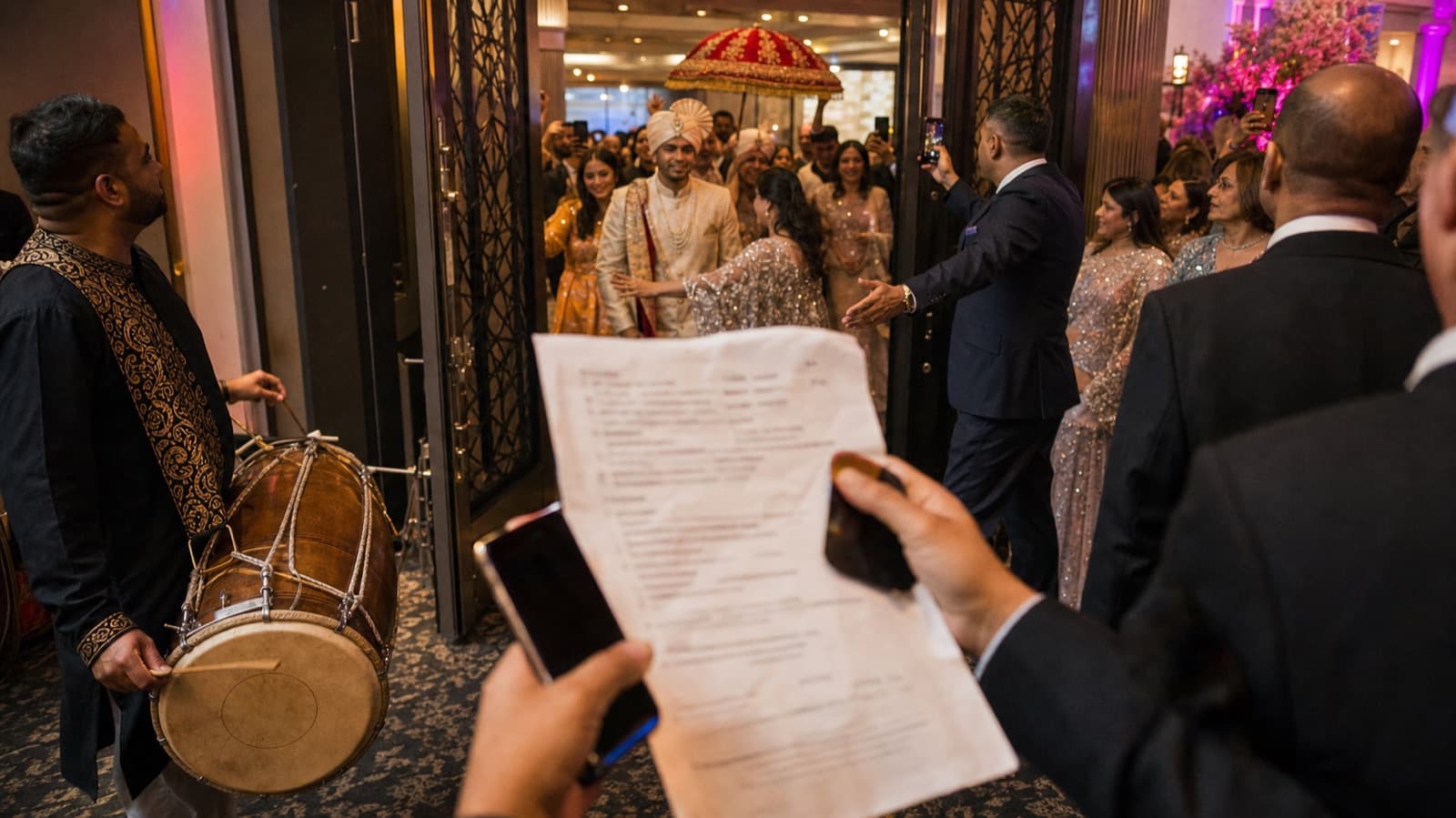
Walk into Curzon Hall on a Saturday in June and you'll see it: 350 guests, three generations, a baraat forming in the car park, aunties already eyeing the dessert table, and a couple who planned this for eighteen months. This is the deep end of Sydney MCing. And every single time, the timeline the planner hands me bears almost no resemblance to how the night actually goes.
South Asian weddings — Indian, Pakistani, Sri Lankan, Bangladeshi, Nepali — are the most demanding, most joyful, most logistically unhinged events in this city. Western Sydney runs the lion's share of them, from Curzon Hall in Marsfield to the big function rooms around Parramatta and Olympic Park. I've stood at the front of enough of them to know the rules that nobody writes down. So here they are.
1. The start time is a polite suggestion
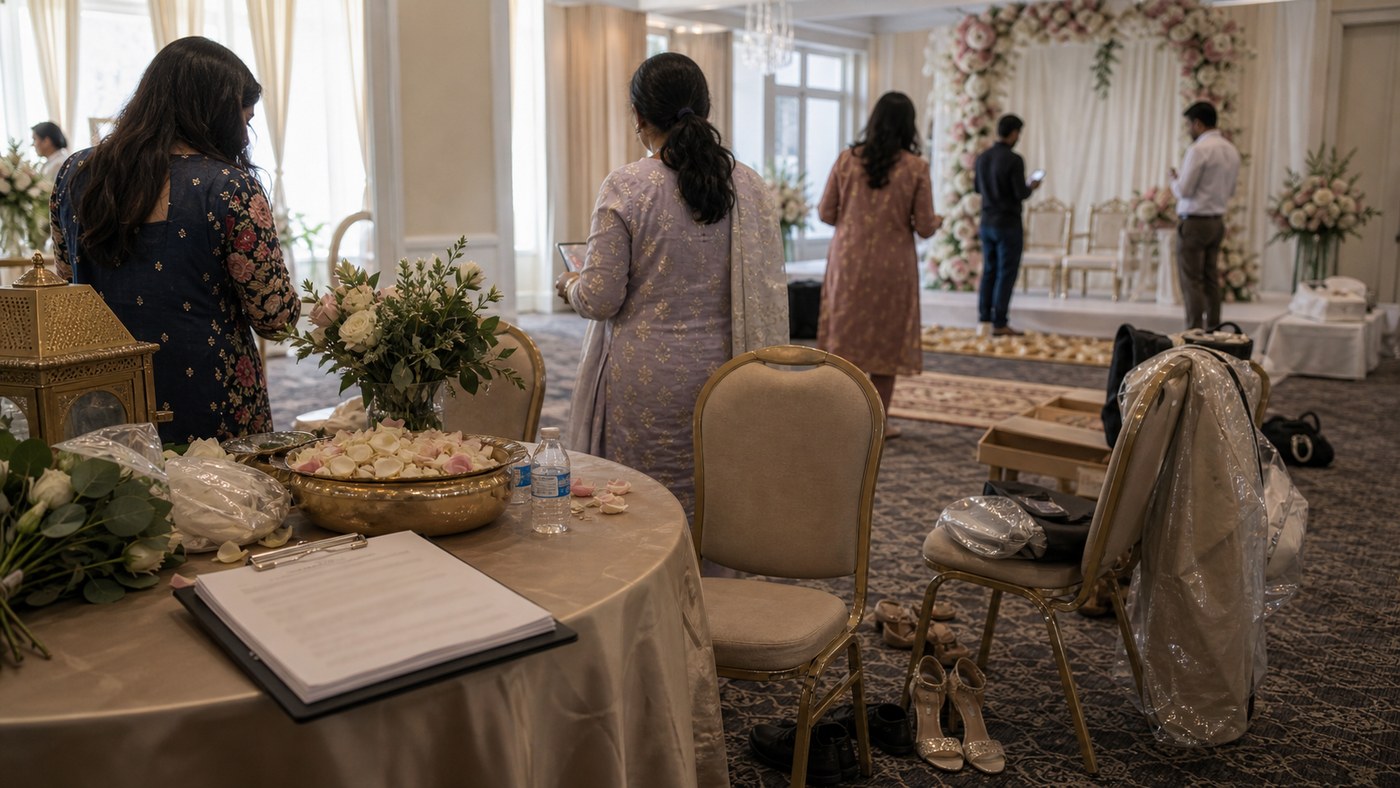
If the invite says 6pm, the room is comfortably full by 7:15. This is not a flaw to be fixed — it's the rhythm of the event, and fighting it makes you the villain. A good MC builds a soft opening: music, mingling, a couple of low-stakes announcements that don't punish the people who showed up on time but don't strand the ones still parking. Panic at 6:05 and you've lost the room before the couple has even walked in.
2. The baraat is the real opening act
The groom's procession — dhol drummer, dancing, the whole street-party energy of it — is not a warm-up. It's a centrepiece. Your job is to read it, not run it. When the dhol is going, you go quiet. When it lands at the door, you lift it higher. The worst thing an MC can do is talk over a baraat because the run sheet said "welcome remarks at 6:30." Bin the run sheet. Watch the drummer.
3. Names are sacred — get them right or don't say them
Mispronouncing the groom's grandmother's name over a microphone in front of 300 people is a special kind of disaster. I phone the family days ahead and have them say every key name slowly while I write it phonetically. If you can't pronounce it confidently, you find another way to honour the person — you don't gamble live on the mic. This is the single fastest way to win or lose a South Asian family's trust.
4. There are at least two languages in the room, often more
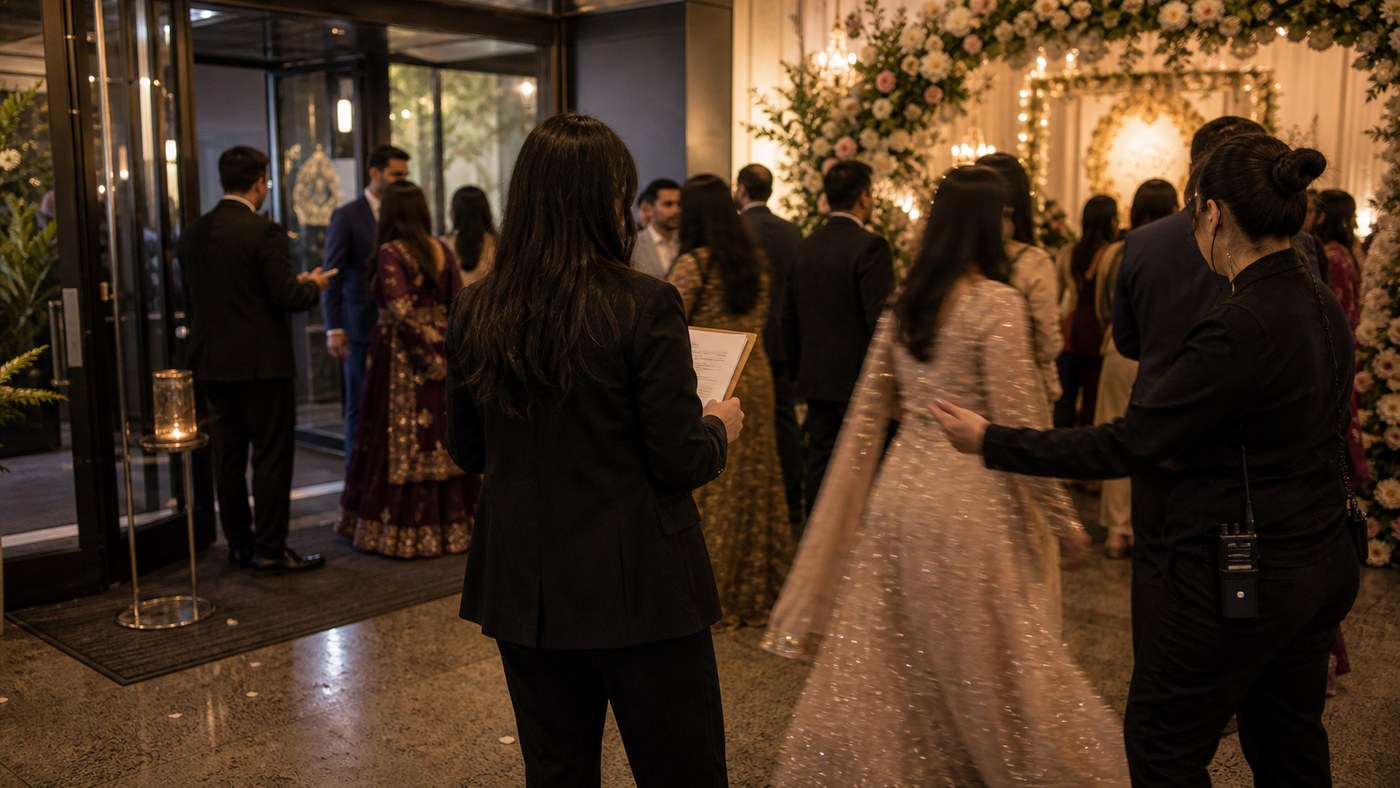
You might have Hindi and English. Or Punjabi, Urdu and English. Or Tamil, Sinhala and English in the one Sri Lankan reception. The grandparents may follow only one of them; the cousins switch mid-sentence. A monolingual MC flattens half the room into spectators. This is exactly why bilingual hosting is The Stage MC's whole edge — being able to land a joke in English and then carry the warmth across to the table of relatives who flew in from overseas keeps everyone inside the night instead of watching it.
5. The aunties are your co-producers, whether you like it or not
Somewhere in that room is a woman who knows exactly when the food should come out, when the speeches are running long, and when the couple looks tired. Find her. Respect her. A nod from the right aunty will smooth more of your night than any printed timeline. Treat the family's senior women as obstacles and you'll spend the evening swimming against the current.
6. The food is not a break — it's a movement
Dinner at a South Asian wedding is an event in itself, and the buffet rush has its own choreography. You don't compete with it. You give clear, calm direction — tables, timing, where to go — and then you get off the mic and let people eat. An MC who keeps interrupting dinner with "fun facts about the couple" is an MC who has misread the entire room.
7. Speeches will run long. Build for it.
The father of the bride has waited his whole life for this. He is not going to wrap in ninety seconds, and you shouldn't expect him to. The skill isn't cutting people off — it's designing the night with enough slack that heartfelt overruns don't collapse the schedule. I'd rather lose four minutes to a beautiful, rambling toast than rush a parent through the most important thing they'll say all year.
8. The rituals set the tone — you adapt to them, not the other way around
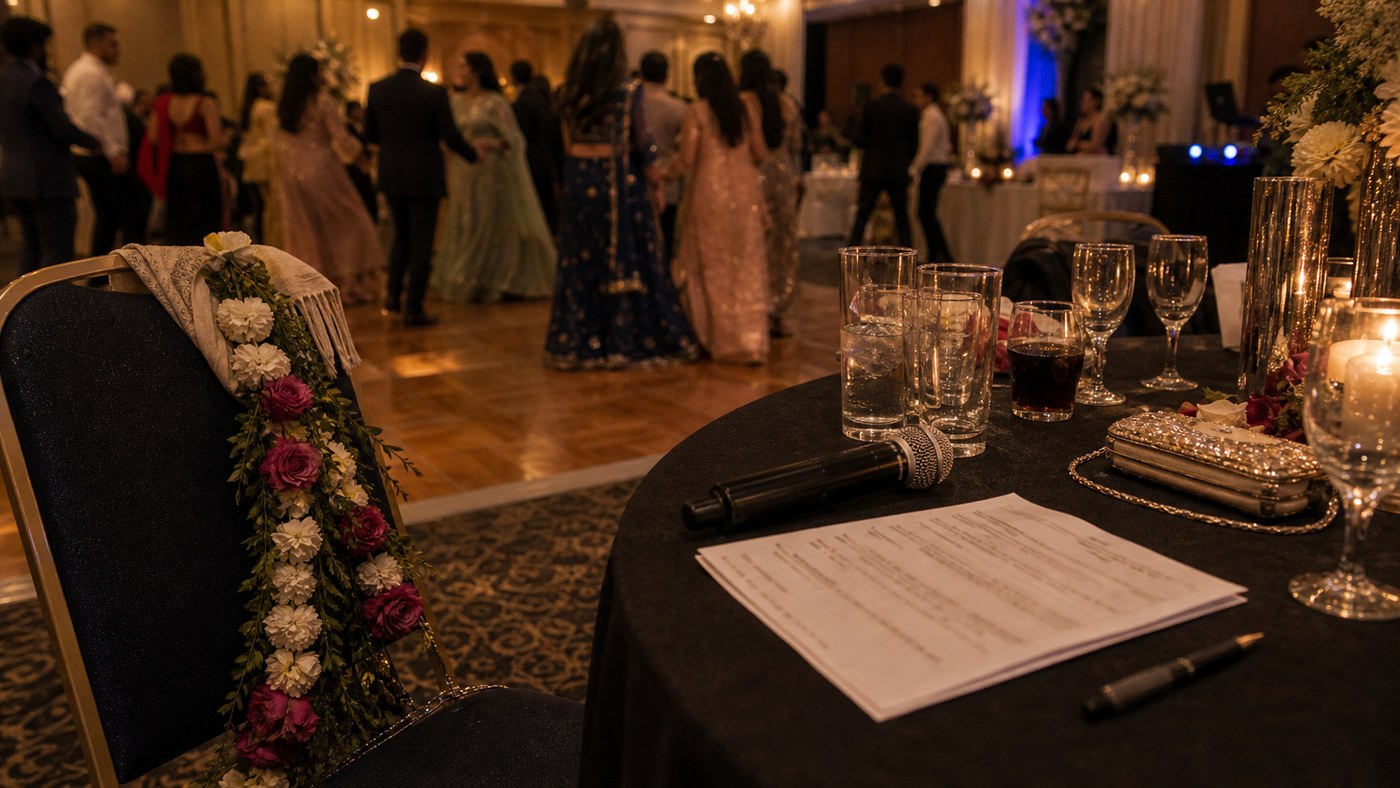
Jaimala, the games where the couple hunt for a hidden ring, the moment the bride's family says goodbye — these carry real emotional weight, and they don't run on Western reception logic. A good Sydney MC learns the shape of each one beforehand, asks the family what matters most, and frames it so even the guests who've never seen it before understand why the room just went quiet. You're a host and a translator of moments, not a stopwatch.
9. Energy is a marathon, not a sprint
These nights go long — five, six hours is normal, and the dance floor at a Punjabi reception does not quietly fade out at 10pm. You cannot peak at hour one. The art is pacing yourself so you've still got lift in the tank when the dhol comes back out for the final set and half the room is on the floor. Burn bright early and you'll be running on fumes when it matters most.
The short version
A Sydney South Asian wedding doesn't want an MC who controls it. It wants one who can read it — the languages, the rituals, the aunties, the rhythm — and ride it. Get that right and Curzon Hall on a winter Saturday stops being the hardest gig in town and becomes the best one. If you're planning one and you want a host who can actually hold all of that at once, that's exactly what we do.
More from the blog


Planning an event of your own?
Tell us about it — we’ll hand-match an MC who fits the room, the language and the moment.