Behind the Scenes: I MCed a Sangeet in Harris Park. The Dhol, the Aunties and a 90-Second Rule Taught Me What 'Hype' Actually Means.
A winter sangeet in Sydney's Little India isn't a party you host — it's a wave you ride. Here's what nobody tells you about running the mic.
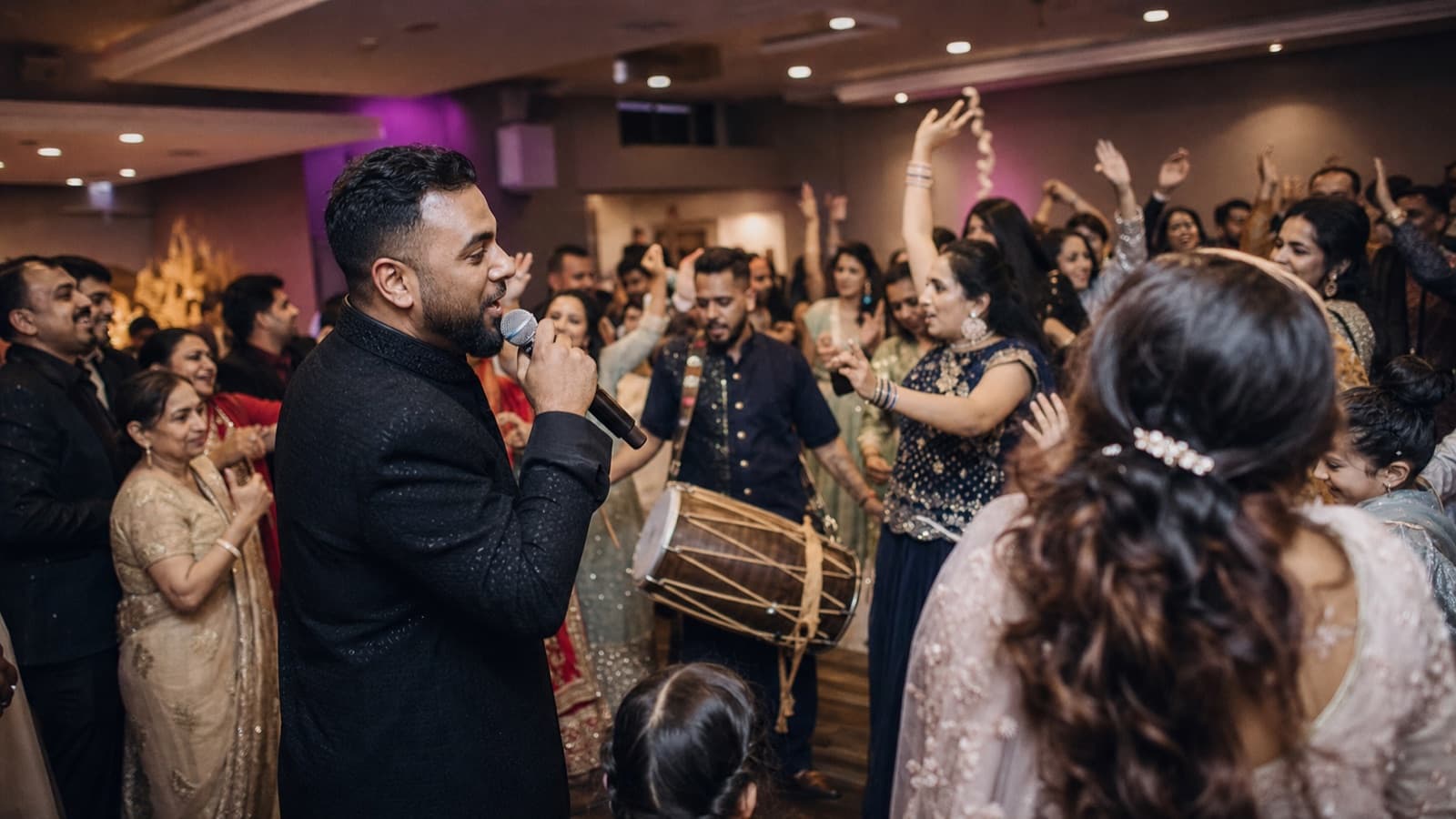
Everyone thinks the hardest room in Sydney is a silent corporate AGM where the CFO won't crack a smile. Cute. Try standing on a riser in Harris Park at a sangeet, three generations deep, a dhol player warming up to your left, a DJ who has Opinions to your right, and 250 people who did not come here to listen to you. They came to dance.
I've MCed a lot of nights across Sydney. The sangeet I ran this winter in Harris Park — the strip off Wigram Road that has quietly become Sydney's Little India, where the sweet shops stay lit past 10 and the smell of jalebi basically counts as a street sign — rewrote a few rules I thought were permanent. Here's the part nobody warns you about.
The MC is not the main character. The energy is.
At a corporate gala, the MC is the spine of the night. At a sangeet, you're more like a surfer. The energy already exists — it's been building since the bride's cousins choreographed their item in a garage in Westmead six weeks ago. Your job is not to create hype. It's to read the wave, get in front of it, and not fall off.
The second you try to be the star, you lose them. I learned this the hard way years ago. Now I open low, hand the room straight back to the family, and let the first performance hit before I say anything clever. The aunties decide whether you're any good in the first ninety seconds. Which brings me to the rule that actually matters.
The 90-second rule
Here's the thing about a sangeet run sheet: it's fiction. A beautiful, well-intentioned fiction. The bride's side has eight performances. The groom's side has nine, because of course they do, it's a competition nobody will admit is a competition. Each one is "two minutes." None of them are two minutes.
So I run on a 90-second rule. Between every performance, I have a maximum of ninety seconds to reset the floor, hype the next group, and get out of the way — before the room's attention starts to leak. Go longer and you're the guy holding up the dancing. Go shorter and the next group isn't ready and you've created a dead patch. Ninety seconds. I count it in my head like a boxer.
Two languages, one rhythm
This is where a lot of MCs face-plant. The room is bilingual — Hindi and Punjabi flying around, English for the younger cousins, and a nani in the front row who is following maybe forty percent of your words but one hundred percent of your tone. If you only run the night in English, you've quietly told half the room they're guests at their own party.
You don't need to be fluent to fix this. You need to be deliberate. A line of Hindi to welcome the elders. The groom's entrance announced so his Punjabi-speaking uncles feel it land. The big moments hit in the language the people who care most actually dream in. It's not about showing off vocabulary — it's about making sure nobody in that room feels like a footnote. That's the whole game, and it's exactly why a multilingual MC is worth more than a great voice on the night. A great voice entertains the people who already understand you. A bilingual one includes everyone.
The dhol player is your co-pilot, not your support act
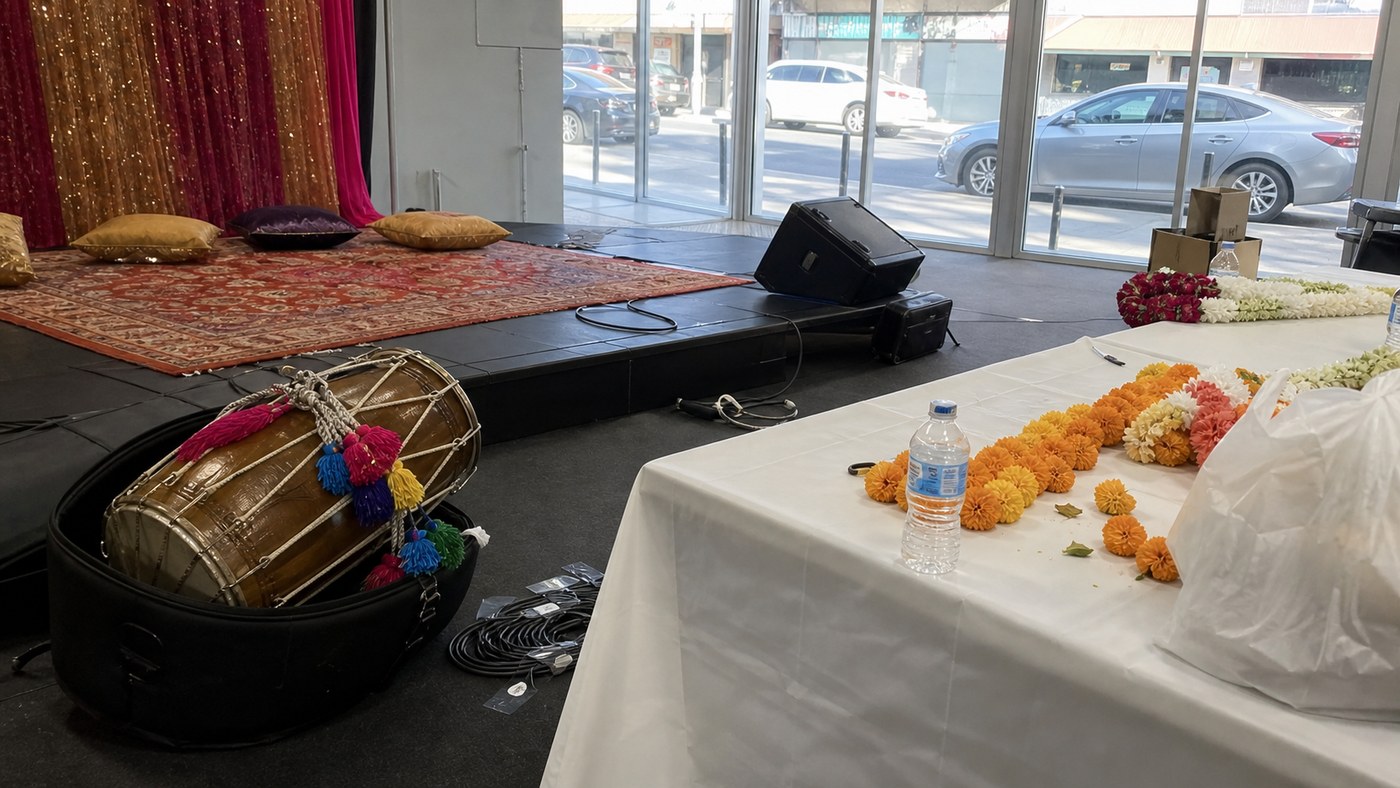
Rookie mistake: treating the dhol player like background. No. That drum is the single most powerful crowd-control tool in the room, and it doesn't belong to you — so you'd better be friends by the time the doors open. I spend ten minutes before the night starts agreeing on cues with whoever's on dhol. One pattern means "bring them up." Another means "wind it down, food's coming." When the MC and the dhol are in sync, you can move 250 people across a room without raising your voice once. When you're not, you're both fighting for the same air.
Harris Park does something the Opera House forecourt can't
I love a marquee Sydney venue as much as anyone. But there's a specific magic to a celebration in a community that has built itself, brick by brick, sweet shop by sweet shop, into a home away from home. The families at that sangeet weren't performing culture for an audience. They were just living it, on a Tuesday-energy Saturday, in a suburb that has become one of the most quietly joyful corners of greater Sydney.
My job that night wasn't to add gloss. It was to stay out of the way of something already beautiful, hold the timing so nobody noticed there was timing, and make sure the nani in the front row laughed at least twice. She did. I'm counting that as a win.
The takeaway, if you're booking one
If you're planning a sangeet, a mehndi, an engagement or any multicultural celebration in Sydney's west — Harris Park, Parramatta, Westmead, wherever your people are — don't book an MC for their voice. Book them for their ears. The ones worth their fee can read a room in two languages, treat the dhol like a partner, and understand that on a night like this, the best thing they can do is make themselves slightly unnecessary. That's not modesty. That's the job.
Now if you'll excuse me, I'm still recovering from the groom's side's closing number. They won. Obviously.
More from the blog


Planning an event of your own?
Tell us about it — we’ll hand-match an MC who fits the room, the language and the moment.