Mythbusted: Your Club Presentation Night Doesn't Need an MC. Yes It Does, and September Is When You Find Out the Hard Way.
Every Sydney junior club thinks the president's mate with the microphone is a plan. Then it's 8:40pm, the under 10s are feral, and 60 trophies are still in the box.

It is September. Across Sydney, grassroots seasons are wrapping up — junior league, football, netball, AFL, all of it — and every club is about to do the same thing they did last year. Book the function room at the local leagues club. Order the trophies. Print a list. And hand the microphone to whoever on the committee is loudest.
That is the myth. The myth says a presentation night is not a "real" event, so it does not need a real MC. It is just parents, kids, sausage rolls and a slideshow. How hard can it be?
Reader, it is the hardest room in Sydney.

Why This Room Is Harder Than a Corporate Gala
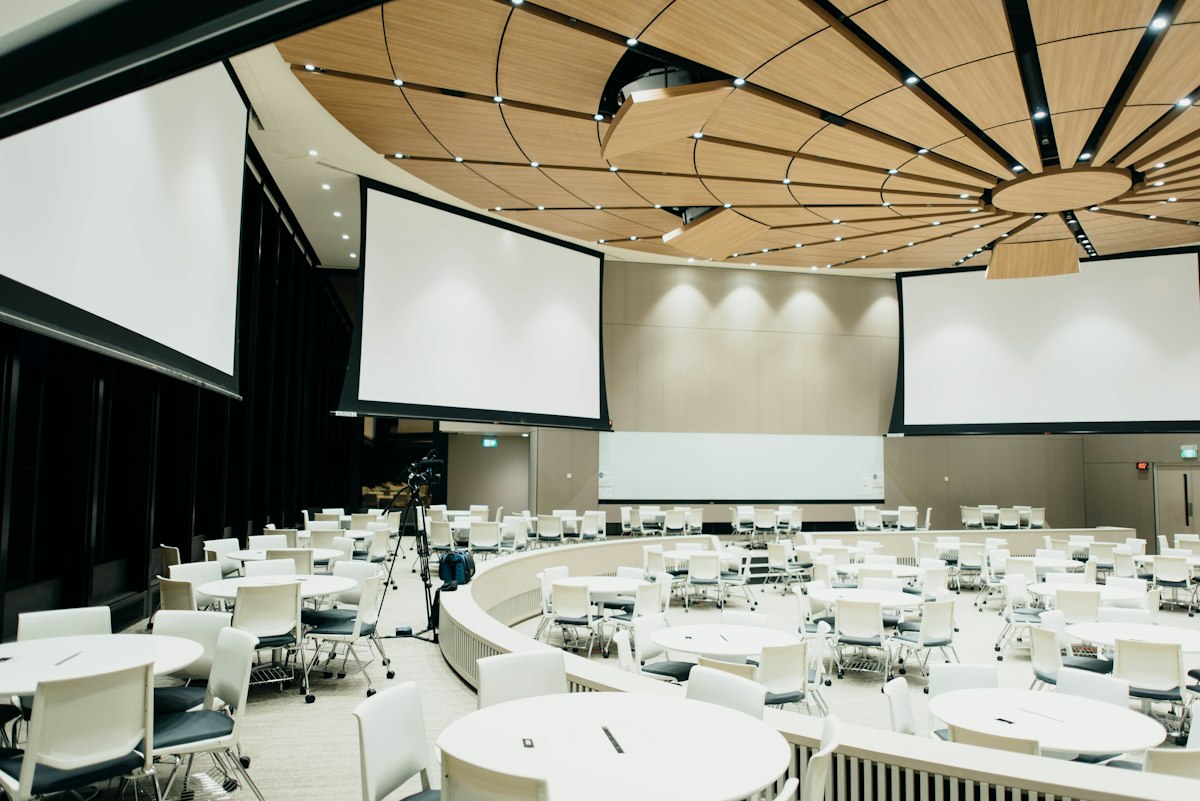
At a gala, everyone is an adult, everyone is seated, and everyone has agreed in advance to sit still for two hours. At a presentation night at Revesby Workers or Bankstown Sports or a surf club up the northern beaches, you have:
- Children aged four to sixteen, none of whom want to be there once their own trophy is collected
- Parents who are there for exactly one name and are otherwise on their phones
- A committee that has never run a run sheet in their lives but has strong opinions about the order
- Sound gear that belongs to the venue and was last checked during the Howard government
- Somewhere between 40 and 300 individual awards to hand out
Every one of those is a timing problem. Together they are a full-blown logistics event with no logistics.
The Failure Mode, Step by Step
Here is how it goes when the microphone stays on the committee. Doors at six. Nothing starts until 6:40 because the club president is chasing the trophy boxes. The first team gets called up and each kid gets a genuinely lovely 90-second speech from their coach. Sweet. Also fatal.
Because there are eleven teams. And 90 seconds a kid across eleven teams is not a presentation night, it is a hostage situation. By team five the coaches are being visibly rushed, which means the last six teams get less than the first five — which is the exact opposite of fair, and the parents of those kids notice. They always notice.
By 8:30 the under 10s are doing laps of the room. By 8:50 half the families have gone home, which means the club's biggest awards — the ones that actually mean something — get handed out to a room that is a third empty.
That is the real cost. Not awkwardness. The club's best moment lands in front of nobody.
What an MC Actually Does Here
Not jokes. The job is time architecture.
- Front-load the mandatory stuff. Sponsors, life members, committee thank-yous — all of it in the first fifteen minutes while the room is full and polite. Not at the end when it becomes a punishment.
- Give every coach the same clock. One shared format, agreed before the night: name, one line, handshake, photo, next. Twelve seconds a kid, not ninety. The coach still gets a proper spot to speak about the team as a whole — just once, not twenty times.
- Split the night at the halfway point. A hard break with food is worth more than any bit of banter. It resets the kids and it stops the drift out the door.
- Put the big awards before the last junior team, not after. Controversial. Correct. Club champion in front of a full room beats club champion in front of the cleaners.
- Own the photo bottleneck. The single biggest time leak on these nights is the photo. Someone has to stage it: kid enters left, trophy handed from the right, photographer already framed. An MC who is not managing that is decoration.
The Bit Sydney Clubs Keep Getting Wrong
Junior sport in this city is one of the most multicultural rooms you will ever stand in front of. Clubs in Auburn, Lakemba, Cabramatta, Hurstville, Bankstown — the kids are fluent, and plenty of the grandparents and parents in the back rows are not. They came for one thing: to see their kid's name called and understood.
You do not need the whole night in two languages. You need the moments that matter — the welcome, the club champion, the thank-you to the volunteers who ran the canteen every Saturday for six months — landing in a language the back three rows actually hold onto. That is where a bilingual MC earns their fee, and it is why we get asked for Arabic, Vietnamese, Mandarin, Cantonese and Greek speakers for community club nights far more often than people expect.

"We Can't Afford One"
Fine. Genuinely, fine — grassroots budgets are tight and the trophies come first. But then at least steal the structure. Nominate one person whose only job for the night is the clock. Not the president. Not a coach. Someone with no team of their own, holding a printed order with times written next to each block, empowered to move things along.
The myth is not that these nights need a professional. The myth is that they need nobody at all — that a room of 200 people, 60 awards and a two-hour venue booking will simply sort itself out because everyone is friendly.
It will not. It never has. Book someone, or appoint someone. But somebody has to be running the clock, and it cannot be the person also handing out the trophies.
Presentation season starts in about three weeks. The good function rooms in the south west and the shire are already going. So is everyone who knows how to run one.
More from the blog


Planning an event of your own?
Tell us about it — we’ll hand-match an MC who fits the room, the language and the moment.