7 Things Sydney's Lebanese Wedding Zaffes Taught Me About Crowd Energy (That No MC School Ever Will)
Drums, swords, ululating tetas, and dabke lines that move like a single organism. Here is what Sydney's Lebanese weddings taught me that no MC course ever could.
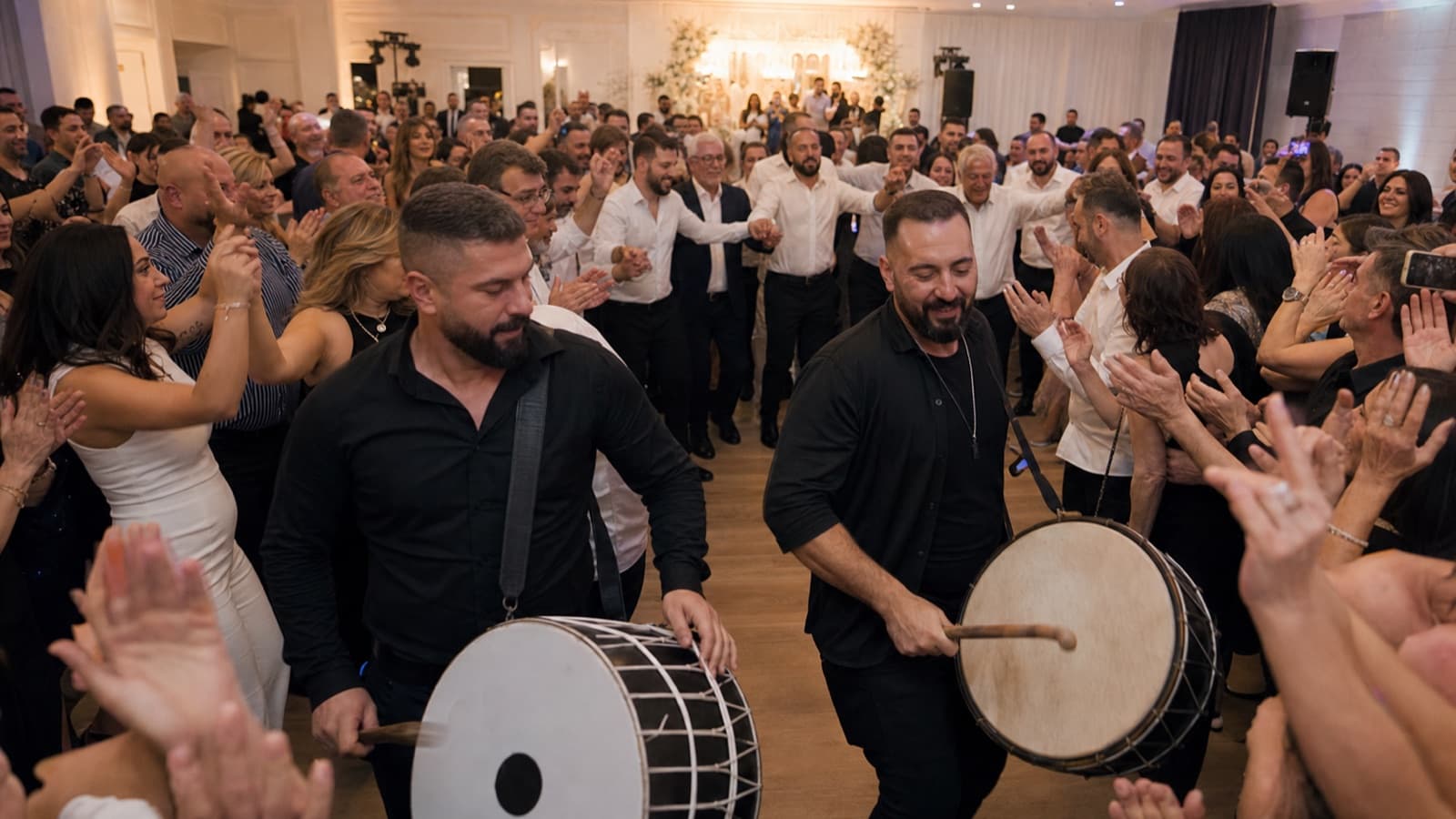
If you have never been to a Lebanese wedding in Sydney, let me paint the picture for you: drums you feel in your chest, dancers, sword salutes, a procession that doubles as a parade, the bride and groom hoisted onto shoulders, and an aunty who appears out of nowhere with a tray of sweets at the exact emotional peak. That is a zaffe. And it is not a "moment" on the run sheet — it is a masterclass.
I have MCed weddings everywhere from Doltone House to a backyard in Punchbowl, and the Lebanese weddings — especially in Lakemba, Auburn, and the deep south-west — have completely rewired the way I think about crowd energy. Here is what they get right that the average corporate emcee training course will never, ever teach you.
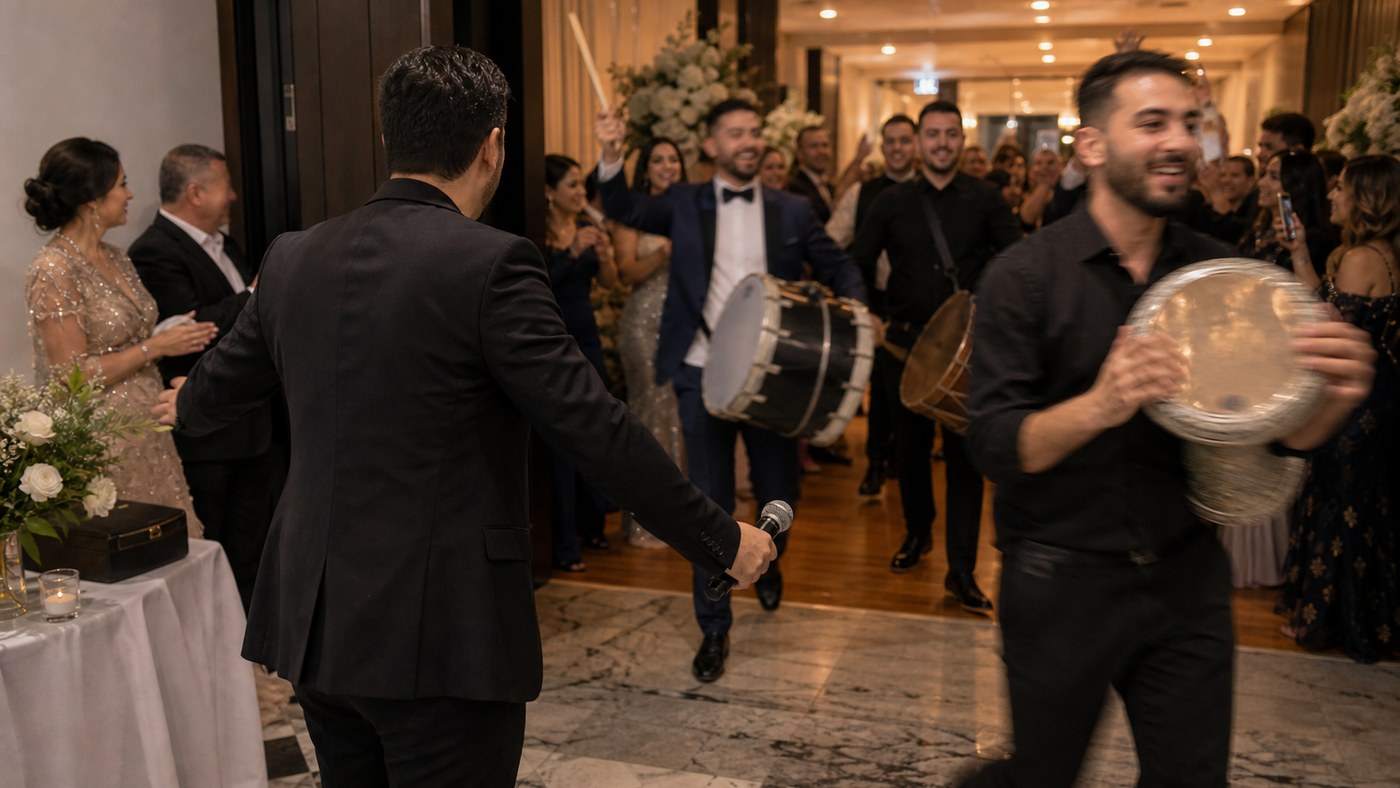
1. The room is already hot. Do not "warm it up" — meet it where it is.
The Anglo wedding playbook says: open soft, build slow, peak at the speeches. Lebanese weddings open at a ten and dare you to keep up. By the time the bride and groom arrive, the derbakes are pounding, the dabke line is forming, and there is a literal sword in the air. Your job as the MC is not to warm anyone up — it is to ride the wave without falling off. I learned very quickly to drop the "Good evening ladies and gentlemen, please welcome…" pleasantries. They do not fit the tempo. You step in, you announce in two languages if you can, and you get out of the dancers' way.
2. Silence is a power move. Use it.
Counterintuitive given everything I just said, but the great zaffe leaders know exactly when to drop the music to a hush so the groom can kiss his mum, or so the bride can have a moment with her dad. That single beat of silence in a room of 400 screaming people hits harder than any speech I have ever given. Steal this. Build a deliberate quiet moment into every event you run, no matter the culture.
3. The MC is not the main character. The family is.
Lebanese weddings have taught me — humbly — to shut the hell up. The energy in that room does not come from me. It comes from the uncles forming a circle, the cousins leading the dabke, the grandmother ululating from row two. My job is to platform them, not perform over them. The best MC moments at a zaffe are the ones where I introduced someone and then physically stepped back into the shadows. If your MC is treating your wedding like their personal showreel, you booked the wrong person.
4. Bilingual is not a "nice to have." It is the whole game.
Here is where I will get a bit cheeky: if you book a Sydney MC who cannot deliver a single line in Arabic at a Lebanese wedding — even a respectful mabrouk, an alf mabrouk, or a warm welcome for the elders — you have already lost half the room. The teta in the corner does not speak English, and she is the most important person at the wedding. The same logic applies to Greek families in Marrickville, Persian families in Eastwood, Vietnamese families in Cabramatta, Mandarin and Cantonese speakers in Hurstville and Chatswood, and Hindi-speaking families across Parramatta. Hire accordingly.
5. The order of operations matters more than the script.
You cannot MC a Lebanese wedding by reading the same run sheet you used at a Bondi ceremony last weekend. The cutting of the cake, the sword toast, the bouquet throw — they all happen, but the when is dictated by elders, by energy, and by the band. The best Sydney MCs I know have learned to abandon the timeline and read the room. If teta wants the cake cut right now, the cake is being cut right now. Adjust your watch.
6. The food is a milestone, not an interruption.
At a corporate gala, food is a polite gap between agenda items. At a Lebanese wedding in Bankstown, Auburn, or the back rooms of a Lakemba reception hall, the mezze coming out is its own announceable moment. Calling out the labneh, the kibbeh, the mixed grill platters that need two waiters to carry — the room loves it. I have started doing this at non-Lebanese weddings too: when something significant hits the table, announce it. It anchors people in the meal, gives the kitchen the credit they deserve, and stops half the room from quietly checking their phones during the entree.
7. Energy is finite. Spend it on purpose.
The biggest lesson Lebanese weddings taught me is that you cannot run a six-hour event at maximum volume, even when it feels like the room can take it. The smart MC plans the peaks and the troughs deliberately: zaffe entrance peak, sit-down dip, speeches slow build, cake peak, dance floor blowout. If you sprint the whole way, the second half collapses into noise. This applies to corporate galas at Doltone House, weddings at Curzon Hall, EOFY parties at The Calyx, even product launches at Carriageworks. Pacing is everything, and there is no better classroom for pacing than a 500-person Lebanese reception.
The takeaway
Sydney is one of the most genuinely multicultural wedding cities in the world. We have Lebanese weddings in Lakemba, Vietnamese tea ceremonies in Cabramatta, Persian aghds in Eastwood, Indian sangeets in Parramatta, Greek baptisms in Marrickville, and Korean engagement dinners in Strathfield happening every single weekend. The MCs who refuse to learn from those traditions are the ones quietly being passed over for the ones who did.
The zaffe is the most generous teacher I have ever had. If you are planning a Sydney wedding — Lebanese or otherwise — book an MC who has been in those rooms, who knows when to speak and when to vanish, and who treats your culture as the star of the night, not the side dish.
More from the blog


Planning an event of your own?
Tell us about it — we’ll hand-match an MC who fits the room, the language and the moment.