Behind the Scenes: I MCed a Samoan Wedding in Western Sydney. The Taualuga Rewrote My Run Sheet — and My Whole Idea of Crowd Control.
A Samoan wedding in Western Sydney runs on faith, fine mats and one show-stopping dance. Here is what no run sheet ever warns you about.
Here is a truth the Sydney wedding industry doesn't love admitting: most MCs have never worked a Samoan wedding, and it shows the second the taualuga starts and they have no idea what they're looking at.
I have. Blacktown, on a Saturday that started in a packed church and ended somewhere past midnight in a function hall that smelled like an umu and victory. And I want to walk you through it, because almost everything I'd been taught about "running" a reception got politely dismantled by about 8pm.
The church isn't a warm-up. It's the main event.
If you come from the Anglo wedding world, you treat the ceremony as the short serious bit before the party. Western Sydney's Samoan community — clustered through Mt Druitt, Blacktown, Liverpool and Campbelltown — does not see it that way. The church is the centre of gravity. The service is long, it is sung in full harmony that'll genuinely make the hair on your arms stand up, and the minister is the most important person in the building until the reception begins.
Lesson one for any MC: you do not "tighten up" the spiritual part to claw back ten minutes for your run sheet. You build the run sheet around it. The faith isn't a segment. It's the frame.
You are not the boss of the room. The matai is.
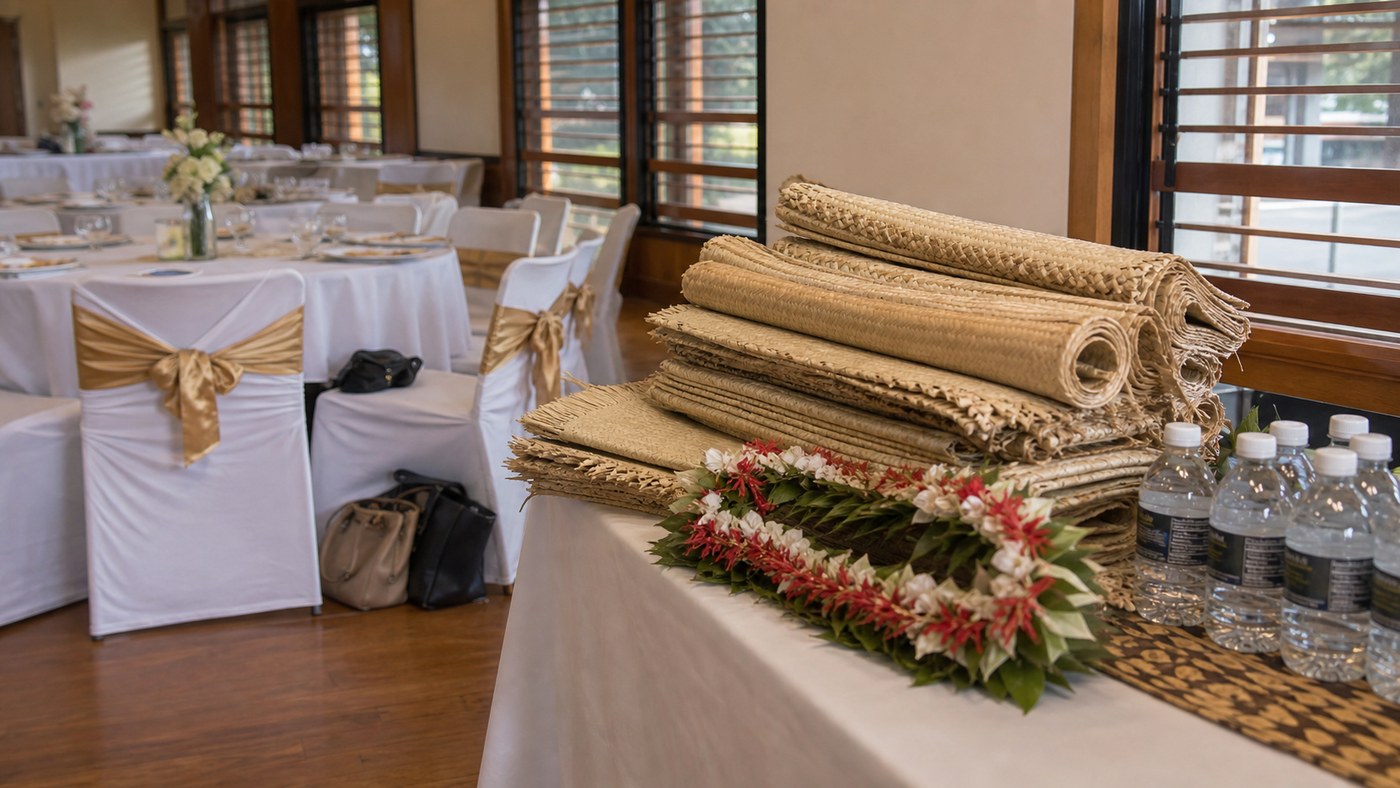
Every culture has a hierarchy at a wedding. Samoan weddings have an actual one. The matai — the chiefs and family heads — carry authority, and there is real protocol around who speaks, in what order, and who gets acknowledged first. Get the order wrong and you haven't just fumbled an intro; you've quietly disrespected an elder in front of three hundred people.
So before I touched a microphone, I sat down with the families and got the order of precedence right. Not approximately right. Exactly right. The MC's job here isn't to run the show — it's to make the right people feel seen at the right moment, in the right language. Which brings me to the part that catches everyone out.
If you only speak English, you're working at half power.
This is where a bilingual MC stops being a "nice to have" and becomes the difference between a wedding that flows and one that stalls. The grandparents in the front rows often think and feel in Samoan first. The cousins down the back are running on Western Sydney English and Tongan and a bit of everything. A good MC reads the room and switches — a warm line in Samoan to honour the elders, then English to keep the younger crowd moving — without making either group feel like the afterthought.
You don't need to be fluent to respect this, but you do need an MC who can carry the key moments in the right tongue, or who works hand-in-glove with a family member who can. The platform exists precisely because Sydney is full of weddings exactly like this one, where one language genuinely isn't enough.
The taualuga: the moment I stopped reading my run sheet.
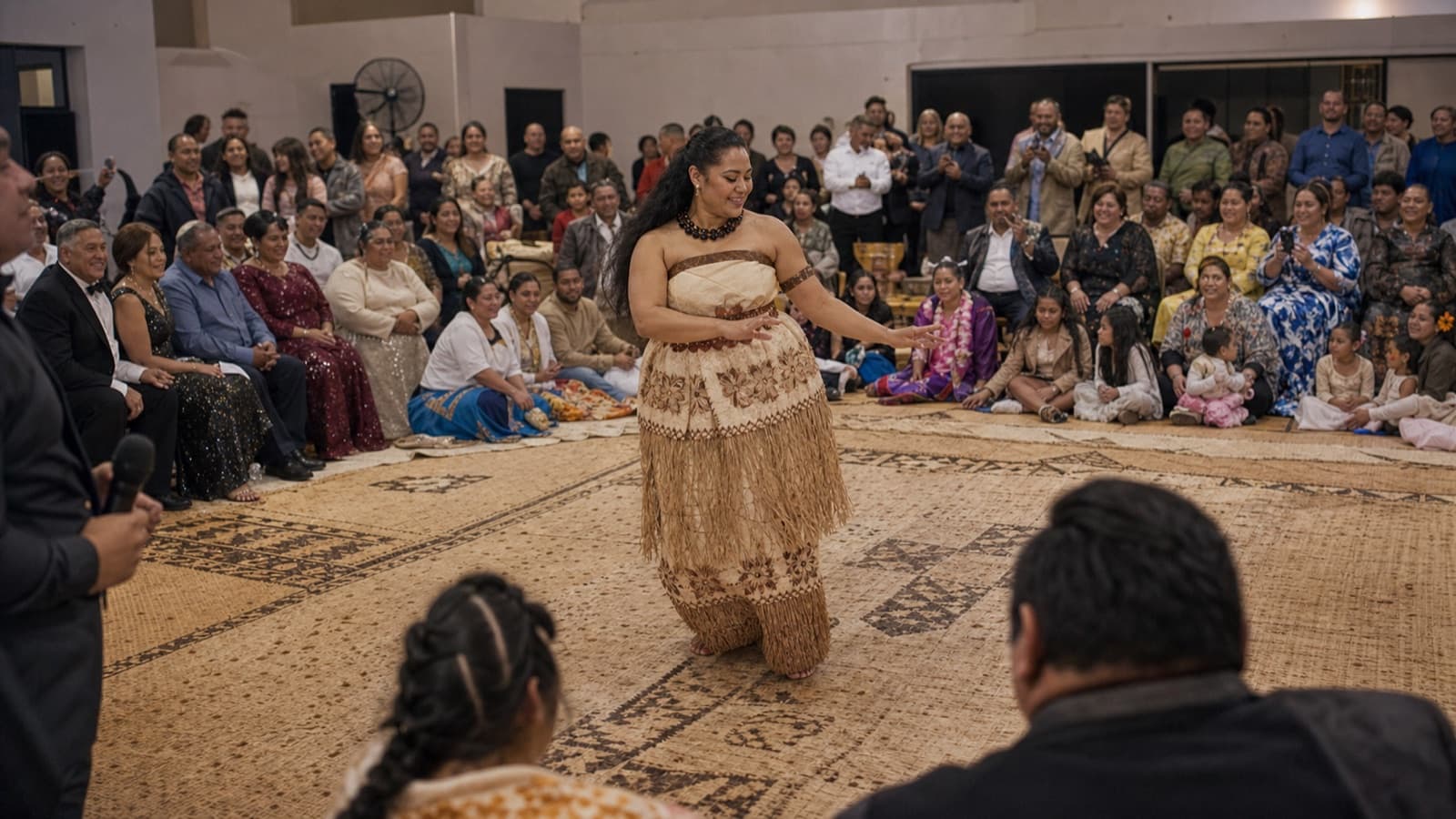
The taualuga is the climactic dance, traditionally performed by the bride, graceful and slow and absolutely commanding. And here's the thing nobody tells the first-timer: it is not a tidy three-minute slot you can time. As she dances, family members rise to dance around her, money is showered and pinned, and the energy in the room builds into something you cannot, and should not, control.
My run sheet said the dance ran from 8:15 to 8:25. The taualuga did not consult my run sheet. People kept getting up. The cash kept coming. The aunties were not finished. And the correct MC instinct — the one it took me one wedding to learn — is to get out of the way. You hold the mic, you protect the moment, and you do not "bring it back on track." That joy is the track.
The food is a love language, and so is the volume.
An umu — the earth oven — is hours of work, and the spread is enormous: taro, palusami, the pig, more than anyone could finish on purpose, because abundance is the entire point. Nobody wants a brisk, efficient reception. Trying to rush a Samoan wedding to hit a venue's "cake by 9, carriages by 11" template is the fastest way to insult everyone in the room.
And it is loud, in the best way. Singing breaks out unprompted. The harmonies the family was doing in church come back at the reception. An MC raised on polite Anglo receptions has to recalibrate their whole sense of "too much," because here, big is the standard, and your job is to ride it, not flatten it.
What every Sydney couple — and every MC — should actually take from this.
You don't have to be Samoan to learn the real lesson here, and it applies to a Tongan wedding in Liverpool, a Lebanese one in Bankstown or a Greek one in Brighton-Le-Sands just as much. The best MC isn't the one who imposes the slickest timeline. It's the one who does the homework, gets the protocol right, honours the language the elders love, and knows the exact moment to shut up and let the culture take the floor.
If you're planning a wedding in Sydney that carries real cultural weight — and in this city, most of the best ones do — book someone who treats your traditions as the main event, not a scheduling obstacle. The run sheet is a servant. The wedding is the king. Get that the right way round and the night looks after itself.
More from the blog


Planning an event of your own?
Tell us about it — we’ll hand-match an MC who fits the room, the language and the moment.