Case Study: A 10-Course Banquet Wedding in Hurstville Where the Kitchen — Not the Couple — Ran the Night. Here's the Fix.
A 300-guest Cantonese banquet wedding, a run sheet written for a western reception, and a kitchen that waits for nobody. What saved it.

Here's a composite story stitched together from banquet weddings across Sydney's south — Hurstville, Kogarah, and a couple of detours into Burwood. The details are blended to protect the innocent (and the aunties), but the lesson is the same every single time.
The setting: a Saturday night in Hurstville. Three hundred guests. A ten-course Cantonese banquet. A couple who'd spent eighteen months planning every detail — the cheongsam change, the tea ceremony photos, the slideshow, the speeches, the table-by-table toast. And a run sheet, lovingly built in a spreadsheet, that had precisely nothing to do with how a banquet kitchen actually works.
Spoiler: the kitchen won. The kitchen always wins. The only question is whether your MC knows that before the first course lands.
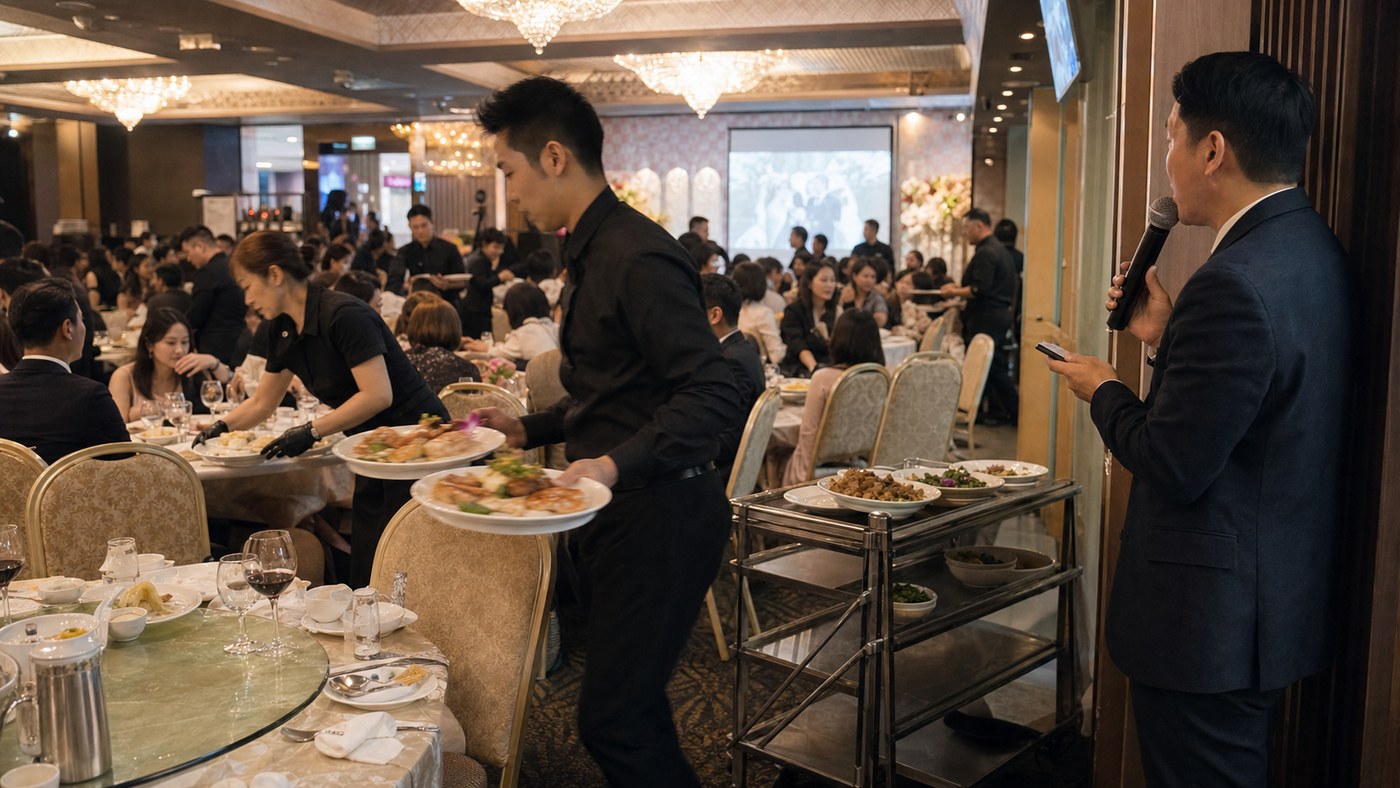
The Run Sheet Said 7:45. The Kitchen Said No.
The plan was western-reception logic: entrance at 7pm, entrée served, speeches at 7:45, mains at 8:30, dancing at 9:30. Neat. Tidy. Completely fictional.
A ten-course banquet doesn't have an "entrée" and a "main." It has ten waves of food arriving on a rhythm the kitchen sets weeks in advance, timed to woks, steamers and a service brigade plating for thirty tables at once. When the suckling pig is ready, the suckling pig comes out. It does not care that Uncle Michael is four minutes into a speech he swore would be two.
By course three, the schedule was twenty minutes adrift. By course five, the father of the bride was giving his speech to a room mid-lobster — three hundred people politely wrestling shellfish while he talked about his daughter's childhood. Nobody was listening. Everybody was cracking claws.
Why Banquet Weddings Break Western Run Sheets
If you've only ever planned around a two-course alternate drop, a banquet wedding is a different sport. Here's what actually sets the clock:
- The courses ARE the timeline. Ten courses across roughly three hours means the night is already structured. You don't schedule around the food — the food is the schedule.
- The banquet captain outranks everyone. Not the planner, not the DJ, not the MC. The floor captain talks to the kitchen, and the kitchen talks to no one.
- Outfit changes eat courses. The bride disappearing for the qun kwa or evening gown change takes two courses minimum. Plan formalities for when she's actually in the room.
- The table toast is a marathon. The couple toasting thirty tables one by one is non-negotiable in a Cantonese banquet — and it takes the length of two or three courses. It's not "if we have time." It's the spine of the night.
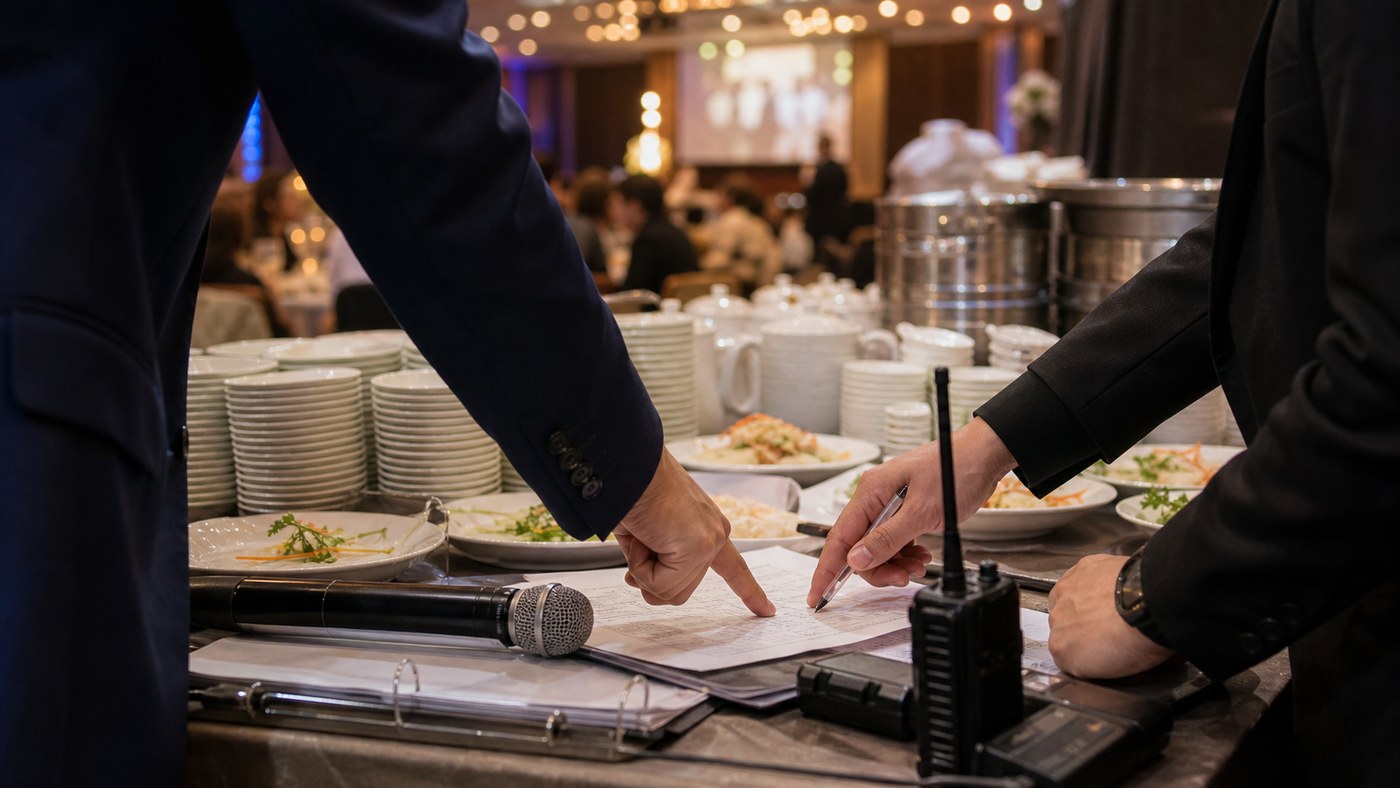
The Fix: Build the Night Around the Courses, Not Against Them
Here's what turned the night around, and what I now push for at every banquet wedding from Hurstville to Eastwood:
- Get the course list from the venue first. Before you write a single line of run sheet, ask the restaurant for the service order and rough timing. Then slot formalities into the gaps between courses — never across them.
- Speeches ride the lulls. The natural pause after a big shared course is your window. Two speeches maximum per gap, three minutes each. If Uncle Michael needs eight minutes, Uncle Michael gets the gap after course seven when everyone's full and forgiving.
- Make friends with the floor captain in the first ten minutes. A good MC checks in before every formality: "Can I take three minutes before the next course lands?" One nod from the captain is worth more than any spreadsheet.
- Protect the table toast. Kill something else if you must — trim the slideshow, cut a game — but never squeeze the toast. That's the part the grandparents will talk about for a decade.
The Bilingual Layer Nobody Budgets For
One more thing that saved this night: announcements landing in both Cantonese and English, back to back, every time. Half the room was following the Cantonese; half was following the English; nobody was left guessing why everyone suddenly stood up holding glasses.
A bilingual MC at a banquet wedding isn't a nice-to-have — they're the interpreter between three parties who don't share a playbook: the western-style run sheet, the Cantonese-speaking floor staff, and a room split across two languages and three generations. When the schedule slides (and it will), the MC who can renegotiate timing with the captain in their language, then reset the room's expectations in both, is the difference between "running late" and "flowing beautifully."
The Lesson
A banquet wedding doesn't need a stricter run sheet. It needs a smarter one — built on the kitchen's rhythm, flexed in real time, and fronted by an MC who treats the floor captain as a co-pilot instead of an obstacle.
Planning a banquet wedding in Hurstville, Cabramatta, Eastwood or anywhere the menu runs to double digits? Book an MC who speaks the room's language — and the kitchen's.
More from the blog


Planning an event of your own?
Tell us about it — we’ll hand-match an MC who fits the room, the language and the moment.