Trend Report: Sydney's July FY Kickoff Is Quietly Killing the December Party — and It's the One All-Hands Your MC Can't Phone In
The Sydney corporate peak is moving from December to July. The new financial-year all-hands is now your most important event of the year — and the most under-prepared.

For years the Sydney corporate calendar had one immovable peak: the December party. Everything built toward it — the venue scramble in October, the Secret Santa nobody asked for, the open bar that turned the CFO into a surprise karaoke act. Then everyone limped into January and pretended it never happened.
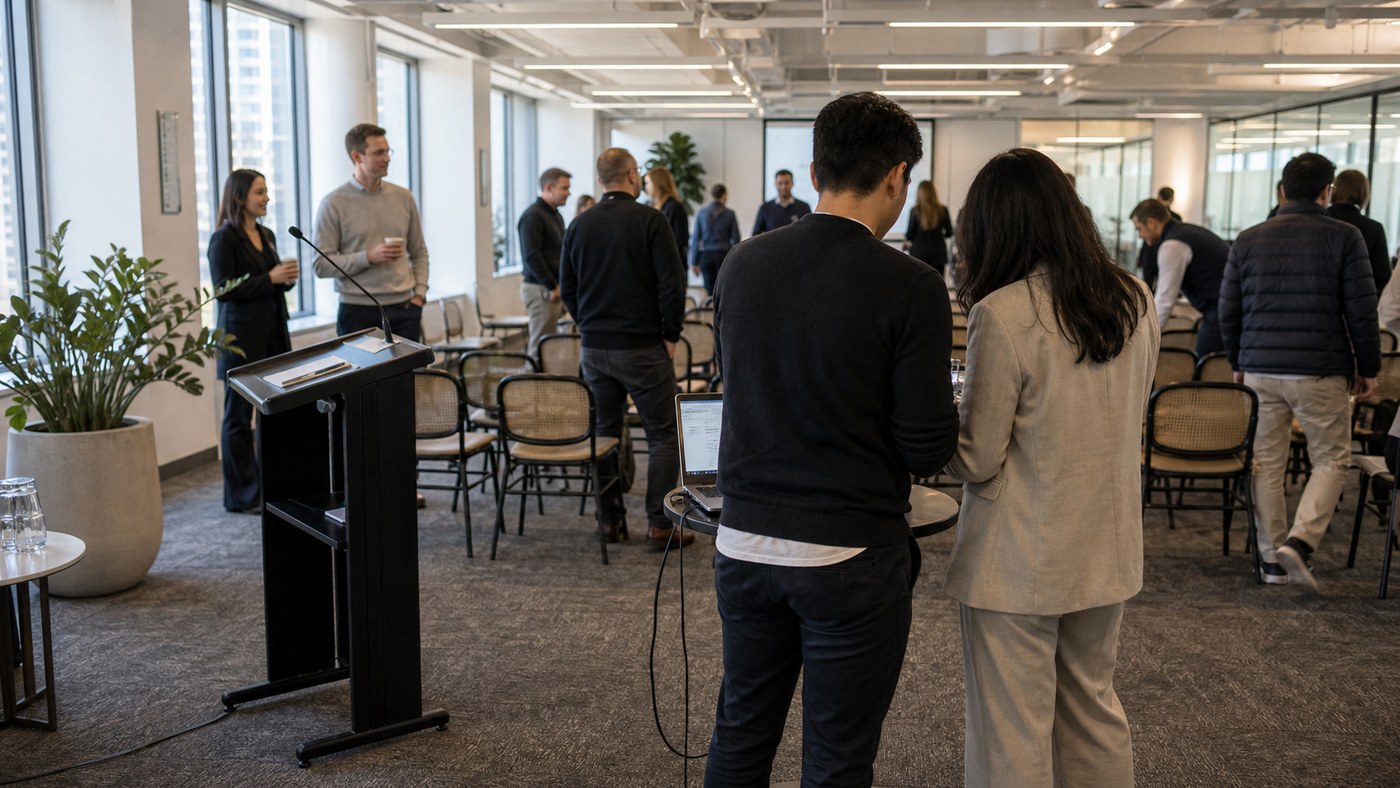
That peak is moving. Walk through Barangaroo or Parramatta's new towers in the first week of July and you can feel it: the financial-year reset has become the event that actually matters. The FY27 kickoff, the all-hands, the "here's where we're going" town hall — booked into ICC Sydney at Darling Harbour, Doltone House on Jones Bay Wharf, the Hilton ballroom on George Street — is quietly stealing December's crown. The catch? Most companies haven't noticed they're now running their most important event of the year with the least preparation.
Why July Beats December (and Nobody Planned It)
December is a reward. July is a reset — and a reset is where people actually decide whether they believe you. The December party is the company saying thanks for surviving. The July kickoff is the company saying here's the year, here's the target, here's why you should care. One is a full stop. The other is the opening line of a twelve-month story.
It's also where the money is. New budgets unlock on 1 July. New headcount, new targets, new "transformation initiatives" with names only a consultant could love. So leadership finally has something to announce — and a room full of people deciding, in the first ten minutes, whether this is a real plan or a slide deck in a suit.
The All-Hands Has a Fatal Flaw: It's Run by the Org Chart
Here's how the average Sydney FY kickoff is structured: the CEO opens with a thank-you. The CFO does eleven minutes on a revenue slide. The head of each function reads their bullet points in order of seniority. Then someone says "any questions?" to a room that has quietly gone to its inbox.
The problem isn't the content. The problem is that the running order is the org chart, not a show. Nobody owns the energy between segments. Nobody decides what the room should be feeling at minute 40. The result is a town hall that has all the right information and none of the pulse — the corporate equivalent of being read a very important text message out loud.
What a Real MC Actually Does to a Town Hall
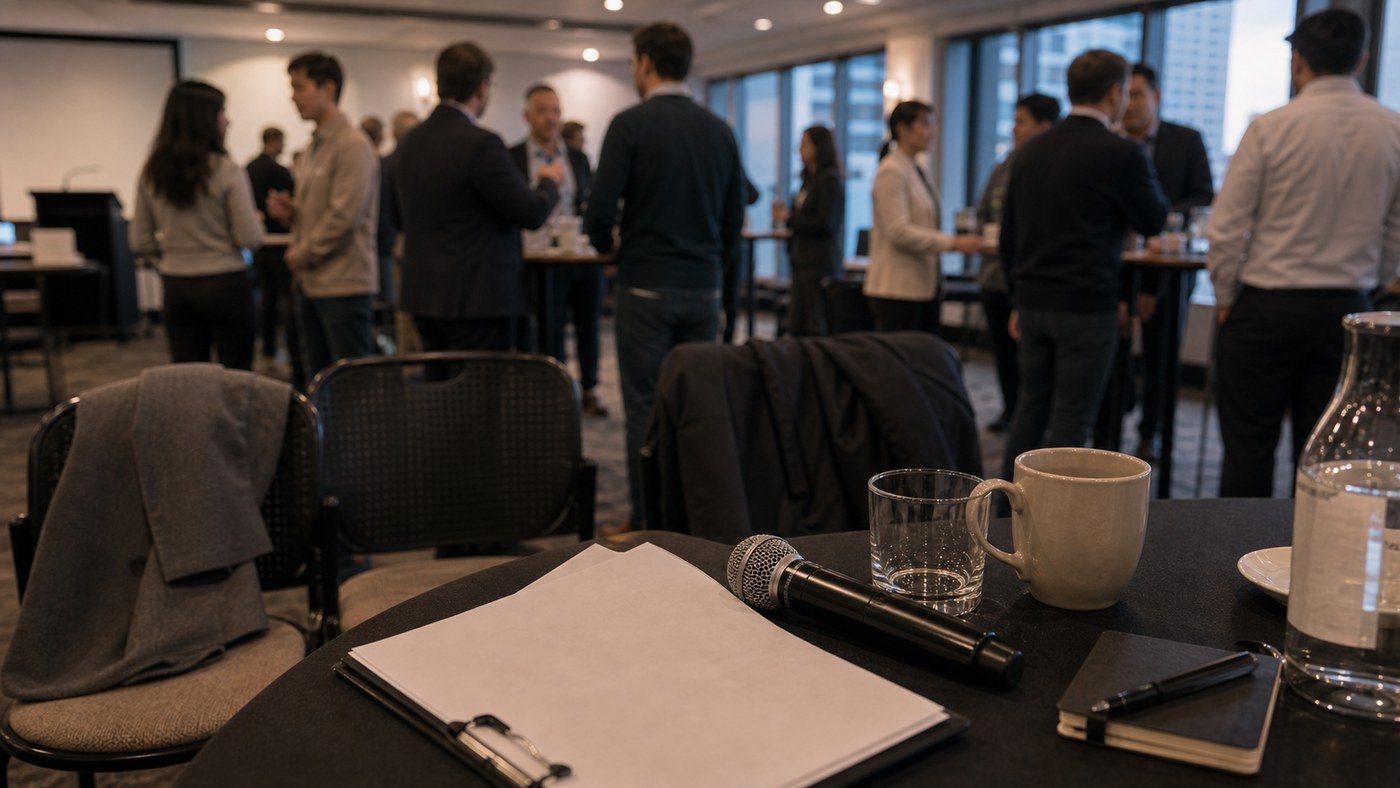
A good MC doesn't show up and "do some links between speakers." They redesign the hour around how a room actually pays attention. They front-load the one thing leadership most wants people to remember, before the inbox wins. They cut the CFO's eleven minutes to six and make the six land harder. They turn "any questions?" — the four words that kill every all-hands — into something the room was warmed up to do twenty minutes earlier.
It's the same principle behind every great event: you win the room before you ever explain the strategy. The MC is the only person whose entire job is the audience's experience, not their own slide. At a July kickoff, that's not a nice-to-have. That's the difference between a plan people repeat at lunch and a plan they forget by the lift.
The Sydney Wrinkle: Your All-Hands Isn't Monolingual
Here's what generic event advice misses about this city. A Sydney company's "all-hands" is rarely one culture in one room. Your Chatswood office skews Mandarin and Cantonese. Parramatta and Auburn bring Arabic and South Asian communities. Eastwood and Strathfield add Korean. The graduate intake at Barangaroo is the most multicultural cohort the firm has ever hired.
A sharp MC reads that actual makeup and adjusts — pacing for a room where English is a second language for a third of the floor, knowing which jokes translate and which die, occasionally landing a line in language that makes a whole table sit up. It isn't about turning the event bilingual. It's about not running a one-size-fits-Surry-Hills show for a workforce that hasn't looked like that in a decade.
If You're Booking a July Kickoff, Do This
- Stop treating the MC as a Friday afterthought. Book the room, then book the person who runs the room. In that order, not three days out.
- Hand over the real goal, not the agenda. "We need everyone to believe the FY27 target is achievable" is a brief. A list of speaker names is not.
- Protect the first ten minutes. That's where belief is won or lost. Don't spend it on housekeeping and a slow CFO warm-up.
- Brief the MC on your audience, not just your leaders. Who's in the room, what languages, what they're worried about this financial year. That's the material.
- Kill "any questions?" A good MC will replace it with something that actually gets hands up.
The December party isn't going anywhere — Sydney loves an excuse. But the event that decides whether your year lands now happens in the first week of July, in a cold ballroom, with new numbers on the screen and a room quietly making up its mind. Run it off the org chart and you'll get polite applause. Run it like a show, and people walk out actually believing the plan. That's the whole game — and it's exactly the part most companies still leave to chance.
More from the blog


Planning an event of your own?
Tell us about it — we’ll hand-match an MC who fits the room, the language and the moment.